
 In anticipation of my upcoming iPhone application release, I figured it was time to stand up a new website with the purpose of distributing my own brand of tools, templates, and talk. The Critical Path will remain as my blog. But, selling products requires branding. By following me on Twitter or reading this blog, I think people will enjoy the HueCubed brand.
Free COTS Package Evaluation Template
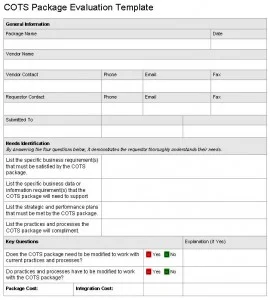
COTS Product Evaluation Template
At my last assignment, I was asked to compare 3 vendors and make a commercial off-the-shelf (COTS) product recommendation to the client. The client knew their budget and products they wanted evaluated. They didn't know if the product capabilities were all marketing hype or if the products would indeed meet their needs. When doing a product evaluation, I tell the customer they must help me do the following [1] List the specific business requirement(s) that must be satisfied by the COTS package.[2] List the specific business data or information requirement(s) that the COTS package will need to support. [3] List the strategic and performance plans that must be met by the COTS package. [4] List the practices and processes the COTS package will compliment.
By detailing the information above, it demonstrates the requester thoroughly understands their needs.
The customer must then answer 2 critical questions that will impact the total cost of the implementation:
[1] Does the COTS package need to be modified to work with current practices and processes?
[2] Do practices and processes have to be modified to work with the COTS package?
Some companies believe if you throw enough money at something, you can fix a problem. Spending a lot of money on a product to "fix" a bad business process just means you spent a lot of money and still have a bad business process.
The last thing you do is create a capability matrix to do a side-by-side comparison of products. Don't paint yourself into a corner! Make sure you complete the Package Evaluation first so the details are available for others to review later. Give your stakeholders the facts. Enjoy this free copy of my COTS Package Evaluation Template.
Free Total Project Status Report Template

TPS Report
As I study the collection and reporting of metrics and project statuses, I find many reports just do not deliver what they should. I believe there should be a stand-alone deliverable that a project manager is able to provide to a stakeholder at any time, illustrating the total project status. I created a report and used the name "TPS Report" from the movie Office Space. I try to interject a little humor into a project, where I can, without raising too many eyebrows. Because I do not think I should keep all of the good stuff for myself, I hope others will download my free template. It captures everything from overall project status to schedule, budget, scope, and quality, including a RAG (Red, Amber or Green) status. What milestones were planned and accomplished? What is planned for the next period? Though I believe a subjective narrative does have its place in project reporting, I like the more objective approach. Give your stakeholders the facts!Please enjoy this free copy of my Total Project Status Report Template.
Free Communications Management Plan Template
 I participated in a Communication Working Group session for the PMO today. Imagine a dozen people sitting around a table laughing for 10 minutes, when they realized I had shaved off my goatee. After the excitement subsided, we rolled up our sleeves and got to work. It was really quite refreshing to see how excited everyone was to be there. (We only had 4 people for the prior meeting) Ishikawa diagrams littered the walls and the smell of Scripto markers filled the air.
I can't stress enough how important it is to have a Communications Management Plan. Feel free to download my template. If not, I recommend following the next 7 steps to write your own.
I participated in a Communication Working Group session for the PMO today. Imagine a dozen people sitting around a table laughing for 10 minutes, when they realized I had shaved off my goatee. After the excitement subsided, we rolled up our sleeves and got to work. It was really quite refreshing to see how excited everyone was to be there. (We only had 4 people for the prior meeting) Ishikawa diagrams littered the walls and the smell of Scripto markers filled the air.
I can't stress enough how important it is to have a Communications Management Plan. Feel free to download my template. If not, I recommend following the next 7 steps to write your own.
- List the project stakeholders and their associated roles and responsibilities
- Specify contact information for each stakeholder
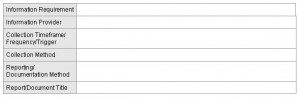
- For each stakeholder identified, specify the information required to keep stakeholders informed and enable them to fulfill their project roles and responsibilities. Also, specify the timeframe, frequency, or trigger for distribution of the information.
- List the information that must be collected, summarized, and reported in order to produce the communication outputs that fulfill the stakeholder information requirements. Specify the associated collection and reporting details.
- List each report or document to be produced and distributed as a communication output to fulfill the stakeholder information requirements. Specify the associated distribution, storage, and disposition details.
- List and describe the distribution groups that will be used to distribute project information.
- Last, define all terms and acronyms required to interpret the Communication Management Plan properly.
The Critical Path Turns 1 Year Old
 Wow, where did the time go? A little over a year ago, I found the need to start blogging. Little did I know how energized I would become. Other then learn as much as I can about my craft, I want to share my knowledge and experiences with other project managers or those who wish to become project managers. Since logging onto Twitter a little over a month ago, I have discovered a whole new world of people to exchange ideas with. What will happen in the next year?
1. Launch at least one project management centric iPhone application
Wow, where did the time go? A little over a year ago, I found the need to start blogging. Little did I know how energized I would become. Other then learn as much as I can about my craft, I want to share my knowledge and experiences with other project managers or those who wish to become project managers. Since logging onto Twitter a little over a month ago, I have discovered a whole new world of people to exchange ideas with. What will happen in the next year?
1. Launch at least one project management centric iPhone application
2. Author an article pertaining to project management and have it published in a refereed journal (e.g. Project Management Journal or Crosstalk)
3. Publish a Project Management centric book and offer it on Amazon.com
4. Monetize the things I enjoy doing
(Calendar image by Apple)
GQM: If you can not measure it, you can not improve it
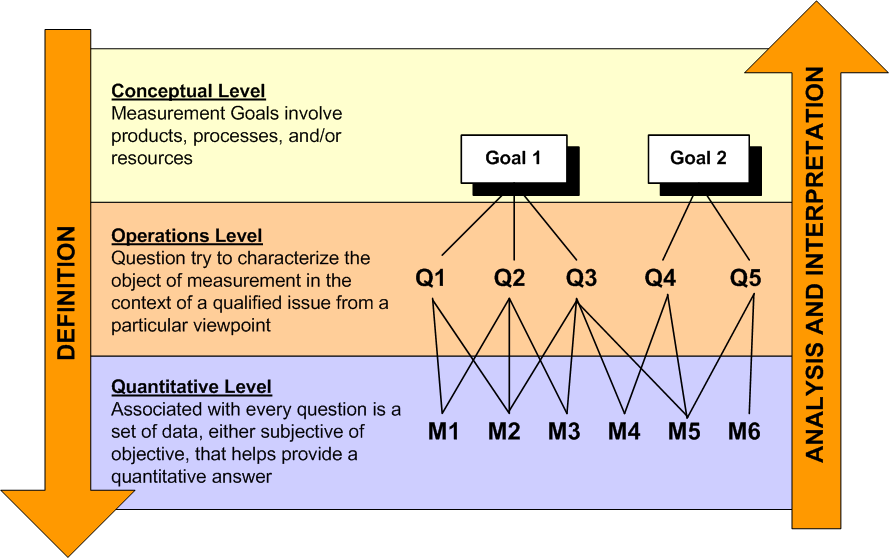
In trying to determine what to measure in order to achieve the goals of a project, a Goal-Question-Metric (GQM) paradigm should be used. It can actually be applied to all life-cycle products, processes, and resources. The GQM paradigm is based on the theory that all measurement should be [1]goal-oriented i.e., there has to be some rationale and need for collecting measurements, rather than collecting for the sake of collecting. Each metric collected is stated in terms of the major goals of the project or program. [2] Questions are then derived from the goals and help to refine, articulate, and determine if the goals can be achieved. [3] The metrics or measurements that are collected are then used to answer the questions in a quantifiable manner.
Image based on Basili, Caldiera, and Rombach "The Goal Question Metric Approach", 1990
Here is an example of the GQM in action:
Goal 1 (use this 4-step process to shape a goal) [1] Purpose [2] Issue [3] Object (process) [4] Viewpoint
Goal 1 [1] Maintain [2] a maximum level of [3] customer satisfaction [4] from the Help Desk user’s viewpoint
Question 1 What is the current help desk ticket trend?
Metric 1, 2, 3, 4 Number of help desk tickets closed Number of new help desk tickets % tickets outside of the upper limit Subjective rating of satisfaction
As the great Lord Kelvin once said, "If you can not measure it, you can not improve it."
10 Helpful Steps to Submit PMI PDUs
I'm in the process of helping a group in the PMO make their submissions for PMI Professional Development Units (PDUs). All PMPs need 60 PDUs during a CCR cycle so don't put it off until the last minute. In this case, they all participated in a workshop. If you want to collect PDUs, you're going to need some kind of evidence. It might be a program agenda, copies of a publication, transcript, certificate, registration form... do I need to go on? This is actually for you in the event PMI audits you. In this case, participating in a workshop, the evidence is not required to actually complete the PDU request online. Know your PMI ID #, Cert #, and Last Name on file with PMI.
Step 1: Log into the PMI homepage. A Membership Status box will appear in the left navigation menu with the following data: PMI ID No.: Member Since: Expires:
A Certification Status box will also appear in the left navigation menu with the following data: PMP No.: Earned: Renewal Date
Within that Certification Status box, at the bottom, is a link titled "View PDUs" [http://tel.occe.ou.edu/pmi/PMI_Member/PDUlogin.php3]
Step 2: Select the "View PDUs" link Step 3: Enter your ID#, Cert#, and first four letters of your last name Step 4: Select the "PMI PDU Self Report Form" radio button Step 5: Select the "Login" button to continue Step 6: Select the Activity you wish to claim ("2e" for participating in a workshop) Step 7: Complete the entire form (know the knowledge area and process group) Step 8: Select the "I Agree" checkbox and the "Continue" button Step 9: Review for accuracy Step 10: Select the "Submit" button
Go back and review your Online Transcript in a few days to verify your submission was successful Repeat Steps 1, 2, and 3
At Step 4, select "PMI Transcript" radio button Step 5: Select the "Login" button to continue to your Online Transcript
See, it's not as hard as you thought!
Critical Path is Back Up
As my eyes rolled to the back of my head last night, waiting for the server to finish configuring, I hoped my website transition plan was going to work. Yesterday, I took control of the Critical Path hosting. That meant everything would have to be reinstalled on a new server and database restored. I kept asking myself if I had planned enough. Other then 6 hours of dead time, due to the release of the domain by the other host, things went relatively well.
The final indicator that I did indeed plan my transition correctly was when the database was restored this morning. The line read better then a tweet.
Import has been successfully finished, 1503 queries executed.