How We Can Make Agile Work

bustedI just read a really good post at PM Hut titled Agile Myths DebunkedSanjeev Singh listed 12 reasons people say Agile won't work on their projects and how they are misinformed.  His list included:Indiscipline, lack of planning, no documentation, no QA involvement, not for fixed bid projects... and the list goes on.

From my experience, organizations commonly get caught up in their project management processes.  I think they fail to realize, when saying they can not use Agile, the goal is to deliver value to the customer. As professionals, we should focus more on how it can work and less on why it can not.  I do believe Sanjeev's listed myths are the primary reasons Agile isn’t more broadly adopted in some markets.  I’ve sat in meetings and heard those same myths listed as though being read directly from his blog post. Only by educating clients and debunking these myths will we see more adoption.  I'm not saying Agile will work in every circumstance for every project.  What I am saying is you should never discount something unless you've at least tried.  Do your research and see where you can make it work.

Impress Your PMP Friends By Understanding SPI and CPI

Variance Charts

Variance Charts

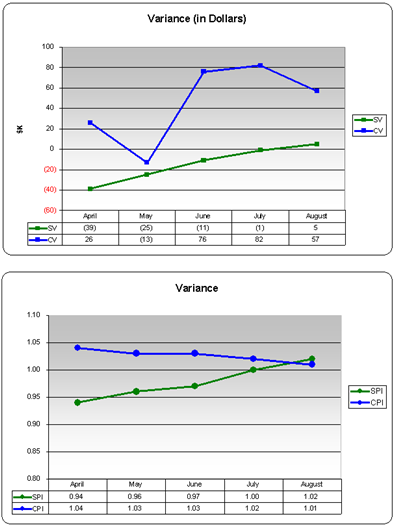
Are you studying for the PMP exam and struggling with the concept of Schedule Performance Index (SPI) and Cost Performance Index (CPI)? Are you just bored and want to impress your friends with your knowledge of SPI and CPI?  Well, I'm going to try to make it easy for you. To the left you'll see two charts.  Both are displaying variances on a monthly basis.  The first chart is displaying variances in thousands of dollars, both in schedule and cost.  The second chart is displaying the variances as they relate to a performance index.

Definitions and Formulas

  • Earned Value (EV) - The estimated value of the work actually accomplished

  • Actual Cost (AC) - The actual cost incurred from the work accomplished

  • Planned Value (PV) - The estimated value of the work planned to be done [Chart 1 - Variance (In Dollars)]

  • Scheduled Variance (SV)=EV - PV a NEGATIVE schedule variance is behind schedule and a POSITIVE schedule variance is ahead of schedule

  • Cost Variance (CV)=EV - AC a NEGATIVE cost variance is over budget and a POSITIVE cost variance is under budget[Chart 2 - Variance]

  • Schedule Performance Index (SPI)=EV ÷ PV You are progressing at __% of the rate originally planned

  • Cost Performance Index (CPI)=EV ÷ AC You are getting $_____ worth of work out of every $1 spent

Practical Application

So, where does that leave us?  Your goal is to have a $0 (zero dollar) cost and schedule variance, resulting in a SPI and CPI of 1.0.  That would mean you estimated correctly, leading into your project.  Going into the PMP exam, you should know these formulas and how to calculate all of the above.  Here are a 2 simple questions you should be able to answer:

1.  Is a 1.3 CPI a good thing or a bad thing?  Why?

This is a good thing!  A 1.3 CPI translates to you getting 1.3 dollars of results for every dollar you put into the project.

2.  Is a 0.90 SPI a good thing or a bad thing?  Why?

This is a bad thing!  A 0.90 SPI translates to your project progressing at 90 percent of the rate originally planned.

Here is the moment of truth. What kind of question is going to be on the PMP exam?

Example Question: Based on the charts listed above, what would you be more concerned with, schedule or cost, if you were taking over this project from another project manager?

Answer: The answer is cost.  As of August, CPI is closest to 1.

Kanban for Lean Project Management

Zen Logo

For those out there using Kanban for Lean Project Management, let me sing the praises of Zen.  Zen is a tool that applies the ideas of the Toyota Production System (commonly known as "lean" principles) to project management. Whether you already practice lean in your organization, you want to set up a lean process, or you just want an easy and effective way to manage your process, Zen will work for you.

Since I started using Zen back in July, my productivity increases has been astounding.  I used to think multi-tasking was the best way to deliver value.  I couldn't have been more wrong.  Instead, I now limit my Work In Progress to only 3 and only focus on 1 at a time.

Though I wrote about this product back in August, I wanted to give a formal product endorsement.  Getting started is free of charge. Once you begin using it on your projects, the cost is reasonable and scalable.  The Zen creators focused on what really matters, and designed an open-ended and easy to customize product.  They don't overwhelm you with metrics and force you to try to figure out what matters.  Instead, they track just a few high-value indicators such as cycle time and lead time.

My Personal Kanban

If you've already implemented lean ideas in your organization, Zen can easily be used to replace a manual kanban board and spreadsheets, and has all the features you would expect to find in a lean project management tool.  If you think I'm a fanboy, you'd be right!  I love this product.  Check out www.agilezen.com

Risk is Like the Five Stages of Grief

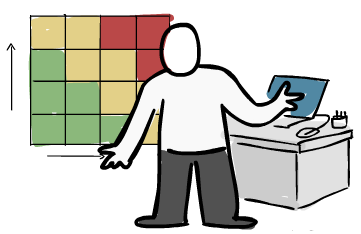
risk

The PMBoK 4th Edition offers several risk related definitions.  I saw a trend that was very similar to the Kübler-Ross model, commonly known as the five stages of grief.  The following are a few actual risk related definitions from the PMBoK.  I hope you find them useful.

PMBoK 4th Edition

Risk - An uncertain event or condition that, if it occurs, has a positive or negative effect on a project's objectives.

Risk Avoidance - A risk response planning technique for a threat that creates changes to the project management plan that are meant to either eliminate the risk or to protect the project objectives from its impact.

Risk Mitigation - A risk response planning technique associated with threats that seeks to reduce the probability of occurrence or impact of a risk to below an acceptable threshold.

Risk Tolerance - The degree, amount, or volume of risk that an organization or individual with withstand.

Risk Transference - A risk response planning technique that shifts the impact of a threat to a third party, together with ownership of the response.

Risk Acceptance - A risk response planning technique that indicates that the project team has decided not to change the project management plan to deal with a risk, or is unable to identify any other suitable response strategy.

Kübler-Ross model

  1. Denial

  2. Anger

  3. Bargaining

  4. Depression

  5. Acceptance

Image Source: Pictofigo

Formulas To Remember For The PMP Exam

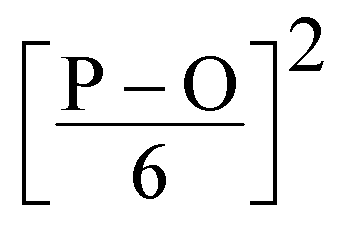
Use this formula on the PMP exam to calculate the variance of an activity

I think back to when I sat for the PMP exam and remember taking the first few minutes to quickly write down the following formulas.  It was my cheat sheet.  There was enough to think about for the next few hours and worrying if I could remember some key formulas was not one of them.  So, here is a bit of advice.  If you're preparing[1] to take the PMP exam, MEMORIZE these formulas.  The exam won't come right out and ask you to identify the correct formula for a variance of an activity. Rather, it will offer a question like:  Your current activity was pessimistically estimated at 65 hours and optimistically estimated at 40 hours.  What is the variance of the activity?  (you can use this formula for both time and cost) You can see how knowing the formula is going to make you or break you on this question.

Do yourself a favor.  Make flash cards, get a tattoo, it doesn't matter.  Commit these formulas to memory and you'll save yourself some pain and suffering (and a few points on the exam).

The Formulas

Acronym

Title

Formula

PERT

Program Evaluation and Review Technique

Use this formula on the PMP exam to calculate PERT

P = Pessimistic Estimate M = Most Likely Estimate O = Optimistic Estimate

Standard Deviation of Activity

Use this formula on the PMP exam to calculate standard deviation of an activity

Variance of an Activity

Use this formula on the PMP exam to calculate the variance of an activity

Total Float

LS - ES or LF - EF

Communications Channels

[N(N-1)] / 2

CV

Cost Variance

EV - AC

SV

Schedule Variance

EV - PV

CPI

Cost Performance Index

EV / AC

SPI

Schedule Performance Index

EV / PV

EAC

Estimate at Completion

BAC / CPI

AC + ETC

AC + (BAC - EV)

ETC

Estimate to Complete

ETC = EAC - AC

VAC

Variance at Completion

BAC - EAC

CPI

c

Cumulative Cost Performance Index

Σ

EV /

Σ

AC

TCPI

To-Complete Performance Index

Use this formula on the PMP exam to calculate TCPI

Free PM Templates and Worksheets Page Updated

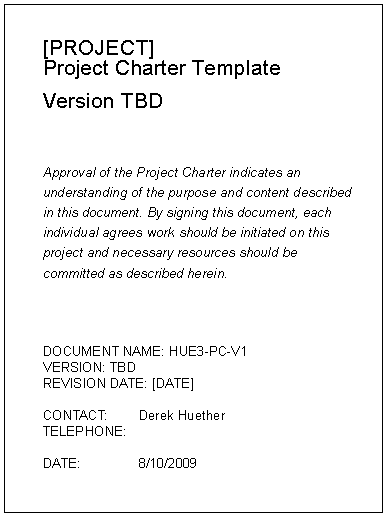
Project Charter TemplateThough I haven't uploaded any new templates today, I did fix some broken links. Thank you PJ for bringing it to my attention.  The Free PM Templates and Worksheets page has been fixed.  I understand the page should be redesigned so it's easier to see what is available.  Thank you for those who let me know when they find an issue on the site.  Feel free to just add a comment to a page.  I'll get it!
Regards,

Derek

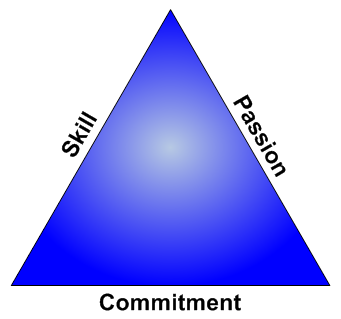
Passion + Commitment + Skill = Success

Passion Commitment Skill

I just read an intriguing post on Dan Schawbel's blog.  It was titled The Excellence Equation: Passion and Commitment. For several years, I’ve been promoting a similar “success” equation. The only component not listed in his blog post was skill. I think ANYTHING is possible if you have passion, commitment, and skill. If you’re short in one area, you can make up for it in another. I’ve worked with people that lacked a specific skill, but were so passionate and so committed, there was no way they were not going to succeed. When building teams for a project, I like to find individuals who excel in each area. I don’t want an overly-skilled team as much as I don’t want an overly-passionate team. But, when there is balance in all three areas, I’ve seen magic happen.

Mike Cottmeyer talks about scaling Scrum

On our current project, we have over 100 people across 14 Scrum teams.  The challenge?  How do you communicate between Scrum teams?  Well, that all depends. What are the dependencies between the teams? Though I could write a 1000+ word post about this, I figured I would just link to a short but informative video.  In it, you'll see Mike Cottmeyer talk about scaling Scrum and how you might have different types of scrum-of-scrums (the way you would communicate between Scrum teams).  Mike is a Product Consultant and Agile Evangelist at VersionOne.  You can read more from Mike on his blog, Leading Agile, or on the VersionOne blog, Agile Chronicles. I'm hoping if all goes well, we'll be bringing Mike to Washington DC to offer a few days of training.  I'm sure this will be one of the many important topics to cover.