Attention Haters - Big Numbers For PMPs In 2009

Data from 2009 issues of PMI TodayThis morning I picked up my January 2010 issue of PMI Today hoping to find something inspirational to write about. Upon realizing PMI Global Congress 2010 - North America is going to be in Washington DC, this October, I decided to write a blog post about it.  Just when I thought I had something local to write about, I noticed some statistics on PMI® Certified Project Management Professionals (PMPs) on the same page.  Though the statistics are only through November, they were very compelling. You may ask, how did I create the chart depicted above?  I went back to each copy of PMI Today and located the monthly data on PMP credential holders.  I know there are haters out there who go on and on about how having the PMP doesn't make you a better project manager.  No, but it does say you speak and understand the same "PMI" language.  According to the data, 356,419 people are currently certified in "speaking" the language.  That is one hell of a number!  We may have all drank the cool-aid but let's face it, the credential IS recognized when people are looking to hire a project manager. So, here are some interesting specifics.  In January 2009, there were 322,250 Active PMPs. In November, the most recent data available, there were 356,419.  Do the math and you find an overall increase of 34,169 in 11 months.  As I looked at the month-to-month numbers, I did find some attrition.  That attrition really surprised me in October.  Even with 3,102 new PMPs, there was still an overall loss of 14,092.  With an individual membership renewals priced at $129, I imagine that opened a few eyes.  Did these people no longer find value in the credential?  Did they retire? Did they die?

Another interesting data point was for the months of June and July.  June saw the certification of 13,920 new PMPs, up from 8,419 the month before.  That number plummeted to a mere 689 in July.  Again, what happened?  Did everyone go on vacation?

One of my jobs is to see trends in data.  I've been doing it for years.  When you look at two dimensional data over time, it does some really interesting stuff.

If you have any questions or comments, please feel free to post them below.
Review of the iStudy PMP App for iPhone and iPod Touch

Disclaimer: Though I recommend this product, I am not financially benefiting from this review.

main page

Questions and Answers

The iStudy PMP is an iPhone and iPod Touch application specifically designed to help those aspiring to pass the PMP® Exam.

If you have seen sample questions from the PMP exam, you know the pain points; double-negatives, lengthy questions, what is the "best" answer...  When I prepared for the PMP Exam a few years ago, I spent several hundred dollars for a program that simulated the PMP exam.  I'll admit, it worked great!  But, what if I could have passed the exam and also saved several hundred dollars?  If this application was around when I was preparing to sit for the exam, I would have purchased it first.

Interface

iStudy PMP contains 200 questions that intend to replicate the PMP exam. The interface is clean and it allows the user to concentrate on answering the questions.  If you come to a question you're not sure about, you can Mark (skip) it.  I thought I ran into some problems with the Mark feature.  Swiping my finger across the screen didn't always advance me to the next card.  After some practice, I realized it was just me. The application was working just fine.

Not to get ahead of myself, but there is a results page to see correct/incorrect results.  One thing missing is a similar navigation page showing the skipped questions.  You're given the opportunity to go though the skipped questions at the end of the exam but you can't see how many skipped you have.  You just have to go through them one by one.  I contacted the creator of the application and he confirmed this is something to be resolved in a future update.

Tests

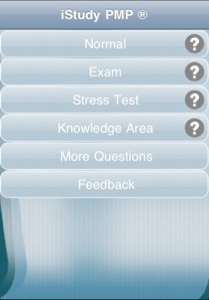
iStudy PMP has 4 different modes designed to cater to different learning styles.

Normal - This mode displays all 200 (randomized) questions and allows you to sequentially browse. You can go back and forth as many times as you wish, but you have to go in sequential order.

Exam - This mode is similar to the Normal mode minus the fact you have a time limit of 4 hours to answer all of the questions. You can go back and forth between questions as many times as you need to change answers.  If after 4 hours you have not answered all of the questions, the exam will automatically end and your results calculated.  This is good because if there was one thing I took away from doing full length practice exams, they help you build up your stamina.

Stress Test - This is a pretty interesting mode. I like that you choose the number of questions you want to answer (out of 200) and an amount of time you wish to allow yourself.  If you fail to answer a question before the timer hits zero then that question is marked as incorrect and the application advances you to the next question.  Let's say you set the stress test to 15 questions and 2 minutes per question.  Your stress test will be done in 30 minutes.  Pretty cool.

Knowledge Area - The PMP Exam assesses your competency from 9 Knowledge Areas. This mode is like the normal mode but it allows you choose a specific knowledge area.  This is a nice feature when you know you have specific knowledge weaknesses.

Results Screen

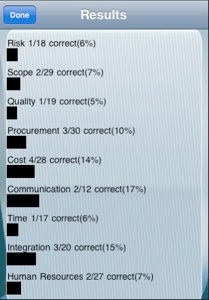
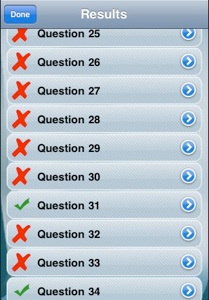
Once you have completed a test, or if you intentionally end it, you will be presented with the Results screen. Here you will see whether or not you passed the practice exam. Results will be broken down by knowledge area so you can see where you need to improve.  All questions will be listed as either correct and incorrect with an option to display the entire question and answers.

Summary

For $10, I say go for it!  One feature I really like is the questions appear completely random.  So, each test should be unique.  If you're interested in this app, you can get it from the iTunes store, go to www.istudyapps.com or click here.

Provide Value To Your Customer And Thank Them

Gary Vaynerchuk Thank YouBack in November (2009) I was watching Episode #24 of This Week in Startups featuring Jason Calacanis.  His guest that week was Gary Vaynerchuk, of Wine Library TV fame and countless appearances on TV.  Sometimes I arrive a little late to the game.  I Don't watch a lot of television so I hadn't seen Gary before.  While on the show, he promoted his new book Crush It! and I was absolutely intrigued by his level of passion and drive.  My motto is anything is possible through passion, commitment, and skill.  It doesn't matter if you're a project manager, developer, or entrepreneur.  You can and SHOULD have all three, regardless of your trade.

I've been itching to get this book.  Because I have a lengthy commute, I waited until it was available in audio version.  I downloaded it last night and started listening to it this morning.  After my commute today, I arrived to the office not wanting to turn it off.  The book is inspiring, motivating, and I identify with several things Gary has experienced and promotes.  I am a firm believer if something is bad, you can say something about it.  But, if something is good, you need to stand on the tallest hill and yell at the top of your lungs.

The hill, in this case, is Twitter.  I wrote just a single tweet:

Started listening to Crushit! by @garyvee on my drive in today. Get the audio version (extras), even if you have the actual book.

Within a few minutes, Gary tweeted back

thank u !

Now that, people, is commitment to customer service!  With almost 850,000 people following him on Twitter, he took the time to thank me.  Though it was something so simple, it's a level of customer service everyone should and WILL come to expect in the coming years.

When I deal with my customer(s), I get excited, optimistic, and passionate.  I work HARD.  Why?  I love it!  Sure, I get paid for providing value but I make sure I thank them from time to time.  There must be a commitment to customer service.  The interesting thing is, it can be contagious.

So, work hard and be passionate about what you do.  Be committed to deliver value to your customers.  And don't forget to be skilled at how your implement your solutions.

Disclaimer:  I will not financially benefit from the positive review of Gary's book (but I hope he does).

My Merge of GTD and Kanban

What is the next action

I'm not going sit here an boast of being some kind of expert on Kanban or guru of personal productivity.  I'm just a Project Manager/Leader who is always keeping his eyes and ears open for newer or better ways to manage time or work.  I believe you should always try to eliminate non-value-added processes, resulting in a positive impact of customer satisfaction, while reducing support costs.  How do you do that?  You get it done as effectively and efficiently as possible. I recently completed Getting Things Done by David Allen.  It was an interesting book.  Though I use paperless processes to "get things done", David offered one bit of advice that resonated with me.  To advance a task or activity to more of an actionable conclusion, he said to ask "What's the next action?"

This parallels what I do with my Kanban (task) board.  I currently have 4 columns:  Backlog, Work In Progress (WIP), Blocked, Done.  When a prioritized task can not be worked, I put the task card (user story) in the "blocked" column.  I then ask myself the question.  What's the next action? Without asking yourself that simple question, your task may be blocked longer than necessary.  You have to understand there may be 3 or 4 steps you need to complete before you can unblock your task and get it back to WIP.  So, ask the question.

As to not ignore the obvious, I recommend you write your tasks in a standard user story format.As a [perspective], I want to [activity], so I can [desired outcome]

It doesn't matter if you use a physical or virtual Kanban (task) board.  I recommend following 3 simple rules:

  1. Keep your tasks visible

  2. Keep your tasks limited

  3. Keep your tasks actionable

Daily RSS Feed Reads Over a Cup of Coffee

As one of the items on my personal "resolutions" kanban for 2010, I shortened my list of RSS feeds I've subscribed to.  I will now only keep the RSS feeds in Google Reader that I can actually zero out by Friday close of business. Too many times, we grow these unmanageable lists of feeds, only to see them grow and grow.  As a project manager, you don't accept more and more work, until tasks are completely unmanageable.  Why should reading be any different?  In order to handle tasks, both management and reading, I allocate time for planned "work" and unplanned "work". The more people I follow on Twitter, the more recommended blog posts I read (unplanned) on a daily basis.  I now find myself reading more of these posts than my (planned) RSS reading. My colleague Sridhar of Hyderabad, India, asked if I would provide a list of RSS feeds I subscribe to.  The topics I am interested in include:  Project Management (who would have thought), Agile, Kanban, and Entrepreneurial topics.  I'll admit this is not a complete list.  I also like to see pictures of epic kludges and jury rigs and pictures of the people of Walmart.

Here is my list of RSS Feed Reads (in alphabetical order) that I enjoy over a cup of coffee:

  1. Agile Development Blog
  2. Alec Satin - People, Projects, and Process
  3. CottagePM.com - Project Management for the rest of us
  4. Deep Fried Brain - PMP Exam Prep
  5. Geoff Crane - Solid Portfolio Management with a sharp wit
  6. How to Manage a Camel - Project Management
  7. Jason Calacanis - CEO of Mahalo.com and creator of This Week In StartUps
  8. Jim Benson - Personal Kanban
  9. Josh Nankivel - Founder of PM Student and creator of WBS Coach
  10. Mike Cottmeyer - Agile Leadership and Project Management
  11. Mixergy - Where the ambitious learn from experienced mentors

Free Report from WBS Coach Josh Nankivel

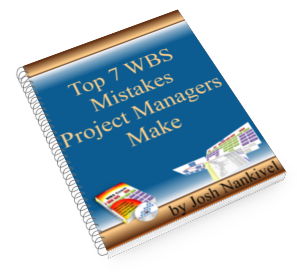
Top 7 WBS Mistakes Project Managers Make I just reread my free copy of Top 7 WBS Mistakes Project Managers Make.  Though I am now a paid affiliate of WBS Coach, I had to first review the products.  I reviewed WBS Coach multiple times (just to be sure).  At $39.99, I wasn't sure if it would meet my expectations.  Well, it did and then some.  I got 5+ hours of video, audio, and textual training and a 68 page PDF textbook.  It even included a one-year unconditional money-back guarantee.

The WBS Coach product includes:

  • Core Lessons: 8 Lessons on WBS concepts, tutorials, and applications
  • Instructor Interviews: 3 interviews, approximately 2 hours
  • Q&A Sessions: Bonus video and audio based off student feedback
  • WBS Checklist: Practitioner checklist for immediate real-world use
  • PDU Credit: Course qualifies for 5 PMI PDUs
  • PDU Reporting Guidebook: Claim PDUs without guesswork

If you're not sure about spending the money, get this free report first.  It's informative and...did I already say it was FREE?

1 of 100 PM Related Questions I Ask Myself

Hmmmmm

Hmmmmm

Question 1: In the hope to help the Project Management industry mature, should project management related templates and worksheets be freely distributed to the project management community or should there be a reasonable fee charged? I am a strong believer in the wisdom of crowds.  If there was a consortium of types with diverse backgrounds in Waterfall, Spiral, RUP, Agile, Scrum, XP... don't you think they could come up with some pretty good stuff?  In this case, all templates would be freely distributed.  I have to admit, the majority of my traffic is from people looking for free templates and worksheets.  It's tempting at times to put them behind a pay wall and ask for 99 cents.

What do you think?

Image courtesy of misallphoto on Flickr

2 of 100 Items Missing From the PMBoK

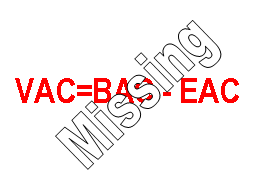
Missing VAC FormulaVariance At Completion (VAC) is the difference between what the project was originally expected (baselined) to cost, versus what it is now expected to cost. Every month, our vendor is required to report this total on the project as a whole and on key deliverables.  I'm used to seeing the numbers reported and how to calculate them.  I'm not asking for the Cost Performance Index (CPI).  I want to know how far over or under we're going to be compared to the budget.

The formula I memorized for the PMP exam and the same formula I use to calculate VAC today is: Variance At Completion = Budget At Completion - Estimate At Completion (VAC = BAC - EAC)

So, I ask myself, [1] why is there no VAC definition and [2] VAC formula in the PMBoK?