My Merge of GTD and Kanban

What is the next action

I'm not going sit here an boast of being some kind of expert on Kanban or guru of personal productivity.  I'm just a Project Manager/Leader who is always keeping his eyes and ears open for newer or better ways to manage time or work.  I believe you should always try to eliminate non-value-added processes, resulting in a positive impact of customer satisfaction, while reducing support costs.  How do you do that?  You get it done as effectively and efficiently as possible. I recently completed Getting Things Done by David Allen.  It was an interesting book.  Though I use paperless processes to "get things done", David offered one bit of advice that resonated with me.  To advance a task or activity to more of an actionable conclusion, he said to ask "What's the next action?"

This parallels what I do with my Kanban (task) board.  I currently have 4 columns:  Backlog, Work In Progress (WIP), Blocked, Done.  When a prioritized task can not be worked, I put the task card (user story) in the "blocked" column.  I then ask myself the question.  What's the next action? Without asking yourself that simple question, your task may be blocked longer than necessary.  You have to understand there may be 3 or 4 steps you need to complete before you can unblock your task and get it back to WIP.  So, ask the question.

As to not ignore the obvious, I recommend you write your tasks in a standard user story format.As a [perspective], I want to [activity], so I can [desired outcome]

It doesn't matter if you use a physical or virtual Kanban (task) board.  I recommend following 3 simple rules:

  1. Keep your tasks visible

  2. Keep your tasks limited

  3. Keep your tasks actionable

Daily RSS Feed Reads Over a Cup of Coffee

As one of the items on my personal "resolutions" kanban for 2010, I shortened my list of RSS feeds I've subscribed to.  I will now only keep the RSS feeds in Google Reader that I can actually zero out by Friday close of business. Too many times, we grow these unmanageable lists of feeds, only to see them grow and grow.  As a project manager, you don't accept more and more work, until tasks are completely unmanageable.  Why should reading be any different?  In order to handle tasks, both management and reading, I allocate time for planned "work" and unplanned "work". The more people I follow on Twitter, the more recommended blog posts I read (unplanned) on a daily basis.  I now find myself reading more of these posts than my (planned) RSS reading. My colleague Sridhar of Hyderabad, India, asked if I would provide a list of RSS feeds I subscribe to.  The topics I am interested in include:  Project Management (who would have thought), Agile, Kanban, and Entrepreneurial topics.  I'll admit this is not a complete list.  I also like to see pictures of epic kludges and jury rigs and pictures of the people of Walmart.

Here is my list of RSS Feed Reads (in alphabetical order) that I enjoy over a cup of coffee:

  1. Agile Development Blog
  2. Alec Satin - People, Projects, and Process
  3. CottagePM.com - Project Management for the rest of us
  4. Deep Fried Brain - PMP Exam Prep
  5. Geoff Crane - Solid Portfolio Management with a sharp wit
  6. How to Manage a Camel - Project Management
  7. Jason Calacanis - CEO of Mahalo.com and creator of This Week In StartUps
  8. Jim Benson - Personal Kanban
  9. Josh Nankivel - Founder of PM Student and creator of WBS Coach
  10. Mike Cottmeyer - Agile Leadership and Project Management
  11. Mixergy - Where the ambitious learn from experienced mentors

Free Report from WBS Coach Josh Nankivel

Top 7 WBS Mistakes Project Managers Make I just reread my free copy of Top 7 WBS Mistakes Project Managers Make.  Though I am now a paid affiliate of WBS Coach, I had to first review the products.  I reviewed WBS Coach multiple times (just to be sure).  At $39.99, I wasn't sure if it would meet my expectations.  Well, it did and then some.  I got 5+ hours of video, audio, and textual training and a 68 page PDF textbook.  It even included a one-year unconditional money-back guarantee.

The WBS Coach product includes:

  • Core Lessons: 8 Lessons on WBS concepts, tutorials, and applications
  • Instructor Interviews: 3 interviews, approximately 2 hours
  • Q&A Sessions: Bonus video and audio based off student feedback
  • WBS Checklist: Practitioner checklist for immediate real-world use
  • PDU Credit: Course qualifies for 5 PMI PDUs
  • PDU Reporting Guidebook: Claim PDUs without guesswork

If you're not sure about spending the money, get this free report first.  It's informative and...did I already say it was FREE?

1 of 100 PM Related Questions I Ask Myself

Hmmmmm

Hmmmmm

Question 1: In the hope to help the Project Management industry mature, should project management related templates and worksheets be freely distributed to the project management community or should there be a reasonable fee charged? I am a strong believer in the wisdom of crowds.  If there was a consortium of types with diverse backgrounds in Waterfall, Spiral, RUP, Agile, Scrum, XP... don't you think they could come up with some pretty good stuff?  In this case, all templates would be freely distributed.  I have to admit, the majority of my traffic is from people looking for free templates and worksheets.  It's tempting at times to put them behind a pay wall and ask for 99 cents.

What do you think?

Image courtesy of misallphoto on Flickr

2 of 100 Items Missing From the PMBoK

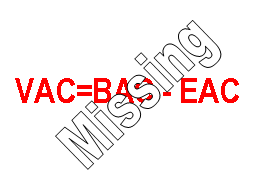
Missing VAC FormulaVariance At Completion (VAC) is the difference between what the project was originally expected (baselined) to cost, versus what it is now expected to cost. Every month, our vendor is required to report this total on the project as a whole and on key deliverables.  I'm used to seeing the numbers reported and how to calculate them.  I'm not asking for the Cost Performance Index (CPI).  I want to know how far over or under we're going to be compared to the budget.

The formula I memorized for the PMP exam and the same formula I use to calculate VAC today is: Variance At Completion = Budget At Completion - Estimate At Completion (VAC = BAC - EAC)

So, I ask myself, [1] why is there no VAC definition and [2] VAC formula in the PMBoK?

Calculating Variance of Activity the PMP way

Use this formula on the PMP exam to calculate the variance of an activity

When I was studying for the PMP exam, a few years ago, I remember memorizing a group of formulas.  One of those was the "Variance of Activity."  At this point, don't remember if it was even referenced in the exam.  There were no direct questions asking "what is the formula for..."  On my exam, I remember having numerous questions resulting from schedule variance calculations and cost variance calculations.  To my surprise, I went searching for the Variance of Activity formula in the PMBOK (4th Edition) and I can't find it!  So as not to lead people astray when giving PMP study advice, I'm now researching each formula I was once told to memorize.  I'm very surprised PMI didn't save us a lot of trouble and list known formulas in the back of the PMBOK.

Defining Organizational Structure

organizational influence

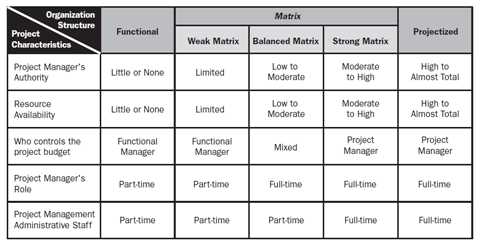
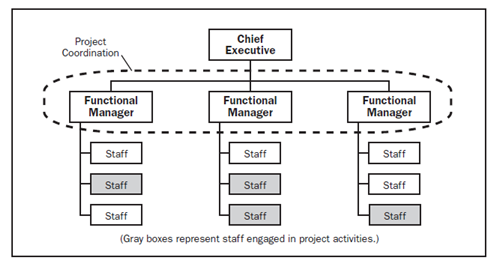
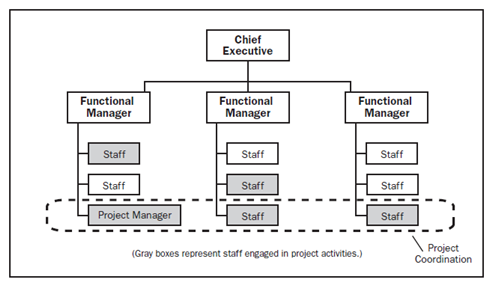
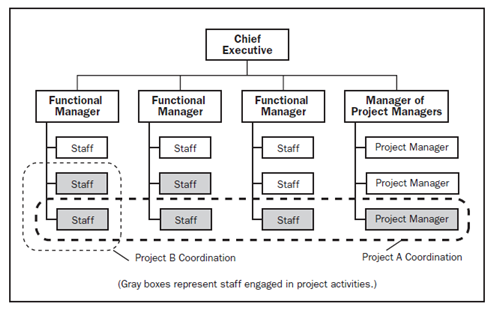
Over the last 15 years, I've seen a lot of interesting ways an organizational structure will influence a project.  I've worked in projectized, functional, matrixed, and even composite environments.  These terms of management are interesting to me because I had to understand the definitions as part of the PMP exam.  At my last engagement, ironically, my boss went so far as to use Wikipedia to get the definition for Matrix Management without realizing I was one of the contributing authors to the page.  Personally, I would prefer to use the PMBOK.  I've noticed quite a few people have modified the Matrix definition on Wikipedia.

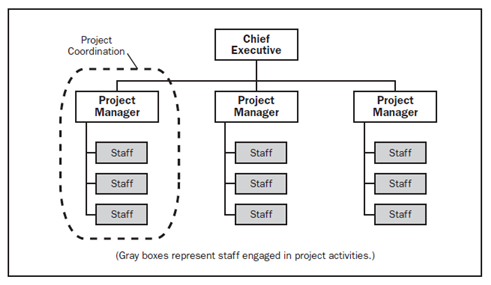
Today I was reading the PMBOK (I'm strange like that) reviewing differences between the 3rd and 4th editions.  What I noticed were definitions (in the glossary) for each organization structure with the exception of composite.  Composite, by the way, is new to the 4th edition.  Perhaps PMI will take notice and add it at a later date.  Below you'll find figures and definitions of each.

projectized
functional
matrixed
Composite

FollowFriday and Noteworthy Blogs

taken from Twitter I'm going to steal an idea that I've seen used on The Project Centric - How to Manage a Camel blog. They have "Monday Morning Links" where they list blogs to read or people to follow on Twitter.  I found Lindsay Scott and the blog via Twitter on a Follow Friday.  I've been reading the blog ever since, enjoying the excellent Project Management related posts.  I've found other great blogs just by reading their Monday Morning Link posts.

I also look forward to #FollowFriday (FF) on Twitter.  It's a great way to find and begin a conversation with other Project Managers, Agile Enthusiasts, Kanban Practitioners, or anyone else having similar ideas or interests.  I feel bad when I sometimes forget to FF others who really should be reminded they write great stuff.

So, here are a few links to posts from blogs I read on a regular basis and a few people I follow on Twitter.  Twitter is so fast paced, a recommendation can come and go and perhaps be lost in the rapid stream of tweets.  By posting a few blog links here, I think there is a higher probability my praise of them will be heard by others.  In Latin I would say nanos gigantum humeris insidentes.  In layman terms, I would say I stand on the shoulders of giants.

Who's blog I read:

  • Alec Satin This week Alec wrote 7 lessons from a heart attack. It was an excellent post that helped me put things into perspective.  I'm glad Alec will be ok and will continue to post about people, projects, and process.
  • Deep Fried Brain This week Harwinder a.k.a Brian Washer wrote about the good, the bad, and the ugly of PMI component chapters.  This was great insight  PMPs (new and seasoned) will find valuable.  This blog provides a lot of excellent information about preparing for the PMP exam or maintaining your PMP credentials.
  • Mike Cottmeyer This week Mike wrote on his Leading Agile blog asking Why is Agile so hard to sell? He went on to ask why wouldn't a management team embrace a set of methodologies so focused on giving them what they need the most?   He's an Agile thinker, writer, consultant, and coffee drinker.

Who I Follow:

@pmstudent - Josh Nankivel helps new and aspiring project managers reach their career goals including gaining experience, education, PMP certification, and more.  He's listed as the "unofficial" most influential Project Manager on Twitter.  His blog is a must read if you're active in the PM community.  He's a member of PMI's New Media Council.  Lastly, he recently released his own product, WBS Coach.  Yes, if you purchase WBS Coach some of the proceeds would go back to me by way of an affiliate fee.  I'm not afraid to say that because I'm honored to be affiliated with what Josh does.  I can't say enough good things about what he does.

That's all I can offer for now.  There are numerous people I would recommend but there is just so much people want to read in a blog post before their eyes start rolling to the back of their heads.