Snow Removal From an Agile PM Perspective

This weekend, our house at the lake received about 30 inches of snow.  It was pretty overwhelming.  Our HOA at Lake Linganore did a very good job and I'm going to tell you why.  Two significant snowfalls ago, we waited 2 days before we saw the first snowplow.  We didn't hear anything out of the HOA.  Days later, the residents got an email from the HOA saying threatening telephone calls and emails  didn't help and to please refrain from doing it in the future.  They believed they did the best they could with the resources they had. I thought they could have done better.  I sent a very pleasant email to the HOA thanking them for their efforts.  A few days later, I sent a followup email with a proposal:  At the next snow storm, I recommended the HOA send out emails, informing the residents of the progress being made.  Whenever I don't like how a product or service was provided to me, I try to offer constructive feedback.  The next storm came, and this time, so did the emails.  There were only a few but they were very clear.  They outlined the priorities of the snow removal.  Main arteries were of highest priority.  The side streets would be tended to when they could.  This time, some residents got stuck before making it to their homes.  They abandoned their vehicles, and unfortunately, a group of vehicles got hit by a snowplow.

Though it took a few days, the HOA came and plowed us out.  Other than those who had damaged vehicles, the tone in the neighborhood was very much improved.  We understood the priorities and respected them.  The communications is what we valued the most.

This weekend, we had an even bigger storm then the last.  This time, the HOA revised their process.  We got emails a day before the snow arrived.  They advised us to get off the roads by a certain time and identified where to park to avoid getting hit by a plow.  We were also provided a list of the highest priorities in order of importance and grouped by need to have and want to have.  Lastly, we received regular emails notifying us of progress or impediments and who could expect to be plowed out next.

Here are a few successes

  • They listened to customer feedback
  • The process was refined, based on user feedback
  • A list of objectives was made and circulated, identifying items of greatest value
  • Regular communications

We received a status report this evening.  In it, we were advised another storm is on its way.  Though the community will be completely plowed by the time it arrives, we were assured the HOA will keep us informed. They added, snow removal operations will be reviewed to see what went right and what when wrong this time around and apply those lessons learned to the next storm.

Did your snow removal go as smoothly this time around?

I would love to hear your comments or stories.

Regards,

Derek
The Critical Path Week in Review

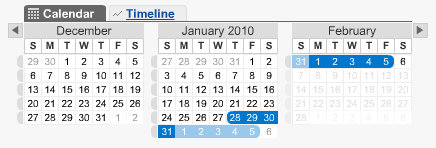
January 28 through February 5This week I really wanted to turn up the volume of things I wrote about.  I have a lot to say (and write) about project management and if you missed reading my blog on a given day and don't have an RSS feed or follow me on Twitter, you'd have to go searching in the archives to find it.  I don't think that's good enough.  I should make it easy for you to read what I write.  Hopefully, this week in review will help you find something new while you enjoy your coffee or tea.

1/28/2010

Seeing Value From The Customer Perspective

I don’t care if you’re using Agile, Waterfall, or other methods to deliver value.  What is important is you understand your process and what mechanisms provide the greatest value to the customer.  Just because a process does not appear valuable to you, it does not mean the process does not provide value...

1/29/2010

Refine Your Process If You Must Deviate From It

If you’re looking for a free Microsoft Visio template of a Sprint process workflow, which you can edit at will, you can download it here.  As I mentioned in my post Seeing Value From The Customer Perspective, if you think you need to deviate from a documented or understood process, rewrite or refine your process to account for the deviations...

1/30/2010

The Impact Of Social Networking On Project Management

Good leaders do not operate in a vacuum. They exchange ideas and information with people. Offer free information and it will come back to you tenfold. Listen to knowledgeable people and then make a more educated leadership decision... In this post I compared the traditional communication paths and how that process is turned on its ear, thanks to social networking...

1/31/2010

This Is How You Know When To Kill A Project

A personal rant about paper telephone books and how I never realized, until now, who the real customer was. There is a very similar parallel between the newspaper industry and the printed phone book industry.  They both believe or promote the scarcity of information.  That scarcity justifies cost.  To the contrary, we now live with an abundance of information.  That information is freely distributed and reaches a broader audience...

2/1/2010

The December Numbers Are In For PMPs

Yes, the December numbers are in.  December 2009 numbers for Project Management Professional (PMP®) certifications were published and it looks like there will be over 400,000 holding the certification in 2010...

December Totals
New PMPs (December 2009) 5,403
New PMPs (YTD) 75,107
Total Active PMPs 361,238

2/2/2010

And The Best Methodology Is

I recently commented on two blogs that address similar topics.  Jesse Fewell wants to empower teams to succeed, equip managers to lead, and enable executives to unlock the secrets of high performing organizations.  Jesse wrote a blog post offering the real reasons behind the methodology wars.  It’s an insightful post and I would recommend you go and read it...

The other blog post was from Mike Cottmeyer, someone I turn to on a regular basis to find inspiration and wisdom within the industry.  Mike wrote a blog post asking Why is Agile so hard to sell? Again, it is a very good read and you should set aside some time to read some of his writings...

The Pain Of IE6 And Application Development

There are legacy applications out there that were built on IE6 and it’s not an easy migration.  There are some Agencies which ONLY use IE6 and the users don’t have permissions to install a new browser.  So, what do you do?...

2/3/2010

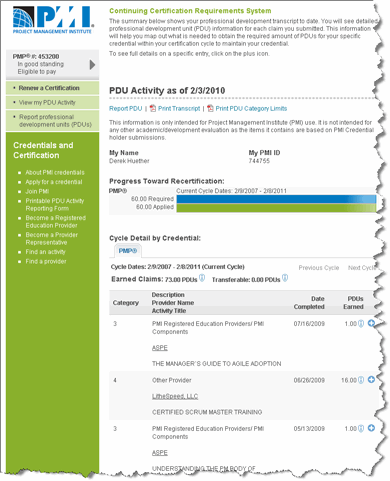
Updated 10 Step Help To Submit PMP PDUs

All PMPs need 60 PDUs during a CCR cycle so don’t put it off until the last minute.  I document the process on how to claim your require 60 PDUs...

2/4/2010

Using Common Sense With Documentation

Though I really love good documentation, going heavy on it does not guarantee a successful project.  My recommendation is you spend a little time identifying documentation that truly meets your needs.  More importantly, identify documentation that truly meets your customer’s needs...

2/5/2010

Managing Risks and Opportunities

Washington DC is in the process of getting 20-30 inches of snow, over the next 24 hours.  Though I know you can’t foresee all possible issues which may occur over the course of a project, you should make an honest attempt to identify them in order to open a dialog with your stakeholders.  Has weather ever delayed your project or pushed it over budget?...

Managing Risks and Opportunities

Washington DC snowWashington DC is in the process of getting 20-30 inches of snow, over the next 24 hours.  The forecast hasn't changed all week.  If anything, it's gotten worse!  At no time did the weather service say this weather event was going to miss us.  The Beltway has been in the cross-hairs of this system since the computer models discovered its formation.   That leads me to write about risks and opportunities.  Actually, for today, it's just risks.  When working on a larger project, you should always have a discovery session early on that will capture potential risks and opportunities.  Once these events are identified, you should quantify their values.  You'll also want to capture the probability of each. Once you've captured a risk (or opportunity), its value, and its probability, you'll know better if you'll be planning acceptance, avoidance, mitigation, or transference.  I'll save that process and definitions for a later time.  Right now, I want to talk about snow.

Yesterday at the meeting I hosted, we discussed our contingency plan for today.  Even before the meeting, we knew we were going to get hit with this weather system and it would impact the schedule.  This was no longer a risk but an issue.  The issue was relevant because our vendor has a contract deliverable due today.  Inclement weather was not annotated in their risk register so it was up to us tell them how this would play out.

Though I know you can't foresee all possible issues which may occur over the course of a project, you should make an honest attempt to identify them in order to open a dialog with your stakeholders.  Local schools systems plan for snow days.  They have documented strategies to deal with these events because they've learned their lessons.  Shouldn't your projects as well?

This snow storm is going to mess with a lot of people and a lot of projects, over the course of the next few days.  I hope we all learn a lesson from it.

Has weather ever delayed your project or pushed it over budget?  I would love to hear about it.

Regards,

Derek

Using Common Sense With Documentation

DocumentationThough I really love good documentation, going heavy on it does not guarantee a successful project.  At my last engagement a product manager asked why she had to go back and complete a business case, a feasibility study, and a charter when her team was already several months into development of  the current release.  She was being consumed by back-filling this documentation.  I believe this was a poor business decision by someone higher in the organization.  They did not "get it".  Documentation is nothing more then a communications tool.  When improperly used, a tool will not necessarily give you the benefit you need.  Need to drive in a nail?  You wouldn't use a screw driver, would you?  Then why would you ask someone to use their valuable time and energy to create a document for the sake of creating the document?  Use the appropriate tool at the appropriate time to get the appropriate results.  If there was a 1 year project with a requirement stating there had to be a feasibility study, then you better have one.  You should have done it at the inception of the project.  But, if you have a project that is only 1 month long, use some common sense. My recommendation is you spend a little time identifying documentation that truly meets your needs.  More importantly, identify documentation that truly meets your customer's needs.  You're not impressing anyone with a SharePoint site or filing cabinet filled to the brim with documentation nobody ever looks at.  One good example of a document that provides value is a Project Charter.  I know, there are hundreds of you out there rolling your eyes.  You figure your stakeholders are not going to sign this document (though they should), formally authorizing a project or a phase.  But, this same artifact does document initial requirements that satisfy the stakeholder’s needs and expectations.  Having this document and answering those questions is going to increase the probability of you having a successful project.  Use it as a communication tool!

Since a majority of the search results coming to this website are from people looking for Free Project Management related templates and worksheets, I decided I better give my readers what they are looking for.  You are my customer!  You have expressed a need or want for templates and worksheets.  I should make it my goal to satisfy those needs.

I'm currently working on a new business case template. What will be in it, you ask?

Project Overview

  1. Problem Statement
  2. Project Description
  3. Project Goals and Objectives
  4. Project Scope (what's included and what's excluded)
  5. Critical Success Factors
  6. Assumptions
  7. Constraints

Authority and Milestones

  1. Funding Authority
  2. Project Oversight Authority
  3. Major Project Milestones

Project Organization

  1. Project Structure
  2. Roles and Responsibilities
  3. Responsibility Matrix
  4. Project Facilities and Resources

Points of Contract

Glossary

Revision History

Appendices

Did I miss anything?  Give me a few days and I'll have it done.

I welcome any feedback or comments.  Just post them below.

Regards,

Derek

Updated 10 Step Help To Submit PMP PDUs

I'm in the process of helping my client make their submissions for PMI Professional Development Units (PDUs). All PMPs need 60 PDUs during a CCR cycle so don't put it off until the last minute. In this case, my client participated in a workshop. If you want to collect PDUs, you're going to need some kind of evidence. It might be a program agenda, copies of a publication, transcript, certificate, registration form... do I need to go on? This is actually for you in the event PMI audits you. In this case, participating in a workshop, the evidence is not required to actually complete the PDU request online.  Because PMI has updated their website, I think it's important you know the new process. Know your PMI ID #, Cert #, and Last Name on file with PMI.

Step 1: Log into the PMI homepage. A Membership Status box will appear in the left navigation menu with the following data: PMI ID No.: Member Since: Expires:

A Certification Status box will also appear in the left navigation menu with the following data: PMP No.: Earned: Renewal Date

Within that Certification Status box, at the bottom, is a link titled "View PDUs" (If you follow the link before logging in, you'll be asked to do so at that time)

Step 2: Select the "View PDUs" link Step 3: In the left navigational column, select Report professional development units (PDUs) Step 4: Select a PDU category and sub-category (if applicable) ("2e" for participating in a workshop) Step 5: Select the Next button Step 6: Complete the entire form (know the knowledge area and process group) Step 7: Select the Next button Step 8: Review for accuracy and enter the number of PDUs (if given the option) Step 9: Select the Next button Step 10: Select the checkbox, agreeing to the accuracy of the claim and Select the Submit button

Go back and review your Online Transcript in a few days to verify your submission was successful.

See, it's not as hard as you thought!

I welcome any questions you may have about the process.

Regards,

Derek

The Pain Of IE6 And Application Development

Yesterday, a vendor advised my client the new feature requested to be implemented doesn't work quite right with Internet Explorer (IE)6.  The feature works fine with all "modern" browsers but IE6 is a major pain point.  You may ask yourself why we're even having this conversation.  Well, because we're talking about the Federal Government.  There are legacy applications out there that were built on IE6 and it's not an easy migration.  There are some Agencies which ONLY use IE6 and the users don't have permissions to install a new browser.  So, what do you do?  Do you embed a browser check in your code and advise the users they need to use a different browser?  Do you "fix" what would otherwise be a clean implementation by making it work with IE6?  I've seen issues with IE6 happen over and over again.  Even with my website(s), I pay attention to legacy Internet Explorer traffic.  I'm happy to report my IE6 traffic is 11% of my overall traffic, down from 21% a year ago.  Still, I will continue to test IE6 until it falls below 10%. What lesson can we take away from this?  Do your homework!  The vendor should have done an analysis (or known stakeholder system requirements) before implementing the new feature.  Catching it in QA is too late.  A little due diligence or prototyping could have saved a lot of time and money.  Knowing the current customer base, the vendor should have known this feature would not be accessible by all and advised the customer.  What would you do?

I would love to read your comments or feedback.  Please post them below.

Regards,

Derek

The December Numbers Are In For PMPs

Yes, the December numbers are in.  This morning, I received my copy of PMI Today.  In it, the December 2009 numbers for Project Management Professional (PMP®) certifications were published.  So you don't have to go searching for it, here are the numbers:

December Totals
New PMPs (December 2009) 5,403
New PMPs (YTD) 75,107
Total Active PMPs 361,238

PMPs in 2009

If you asked me if PMI was headed in the right direction, my response would be

I don't know if PMI is going in the right direction, philosophically, but Project Managers certainly see the value in the certification.

If you are a vendor targeting project managers, you can see which direction the data is going.  If you are in a project management field and have been sitting on the fence about pursuing the certification, you can see which direction the data is going.  No, I’m not being paid by PMI to write this post nor am I a PMI fanboy.  If I had data supporting how many Certified Scrum Masters there were on a monthly basis, I would probably publish that here as well.  Until then, I’ll focus on the PMP.

I also think I will begin making this a recurring monthly post.  You have to be a member of PMI to get a copy of PMI Today.  I believe they are shooting themselves in the foot by not showing the growing trend of PMP certification holders.  I’m also going to go back as far as I can to show more historical data.

What do you think?   I welcome your comments or feedback.

Regards,

Derek


This Is How You Know When To Kill A Project

Phone Books

According to the Project Management Body of Knowledge (PMB0K), projects are authorized due to internal business needs or external influences.  Project end is reached when the project's objectives have been achieved or when the project is terminated because its objectives will not or cannot be met, or when the need for the project no longer exists. This leads me to today's post.

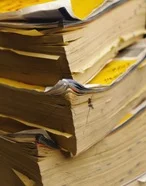
Instead of finding the newspaper on my porch the other day, I discovered someone delivered a yellow pages book (business directory).  It’s been years since I actually opened a phone book.  There are no longer personal phone numbers in the book, only businesses.  Out of curiosity, I opened it to discover 1 in 4 of the advertisement being nothing more then ads to advertise in the yellow pages!  Did you follow that?  Advertisements to advertise.  I can appreciate the idea of continuing to print the phone book.  Anyone not having access to the Internet still needs to find a directory of businesses.  But after reviewing the quality of the product, it makes me question if it is time this thing went the way of the dinosaur.

All this time I thought the people receiving the phone were the customer.  They are not. It's the advertiser.  The creation of the project (or business) of printing phone books use to actually satisfy a need or provide a public service. People needed to find people and businesses needed a medium to tell potential customers they existed.

We've addressed the original need to start the project.  What about to end it?  With the increased usage of Google and Bing, very few people actually read their phone books to locate businesses.  Until businesses advertising in the phone book believe the cost of advertising in that medium outweighs the benefit it provides, it will continue.  Sounds a little bit like the newspaper industry, doesn't it?  There is a very similar parallel between the newspaper industry and the printed phone book industry.  They both believe or promote the scarcity of information.  That scarcity justifies cost.  To the contrary, we now live with an abundance of information.  That information is freely distributed and reaches a broader audience.

I find it ironic, printed on the phone book, the printer asks us to please recycle our “outdated” phone books.  To satisfy their request, this brand new phone book is going right into the recycling bin.  Though I do believe the end is near for the paper-based phone book, I have a recommendation for them.  Since this printing company has our address to deliver the phone book, why don’t they send us a letter asking if we would like to opt-out of future deliveries?  You tell me, are you more apt to read something you've opted-in to or something sent to you like spam?

Photo courtesy of Getty Images